
AI Must Earn Its Keep: Why Old-School Change Analysis Is Beating Shiny New Code

We’ve had The Helix Factor – Implementer’s Edition sitting on our shelf since 2000.
It’s not trendy.
It’s not algorithm-driven.
It doesn’t mention machine learning once.
Yet over the past two years, it’s been on heavy rotation in our projects.
That’s not nostalgia.
It’s necessity.
Because the number of organisations attempting to extract ROI from business process reengineering — while simultaneously deploying AI tools, integrations, automation layers, and bespoke software — has exploded.
And here’s what we’re seeing: Most teams are coding before they’re thinking.
The Shiny New Thing Problem
AI has democratised capability.
Organisations can spend an accessible amount of money and:
Build workflows in low-code tools
Deploy copilots
Integrate APIs
Spin up dashboards
Prototype systems in days
That’s extraordinary.
But speed without structural clarity creates digital clutter, not business transformation.
The mistake isn’t using AI.
The mistake is redesigning workflows without understanding what is actually adding value.
Workflows as Value Add Delivery Systems
One of the most enduring ideas from the Helix methodology is viewing workflows not as task sequences, but as Value Add Delivery Systems (VADS).
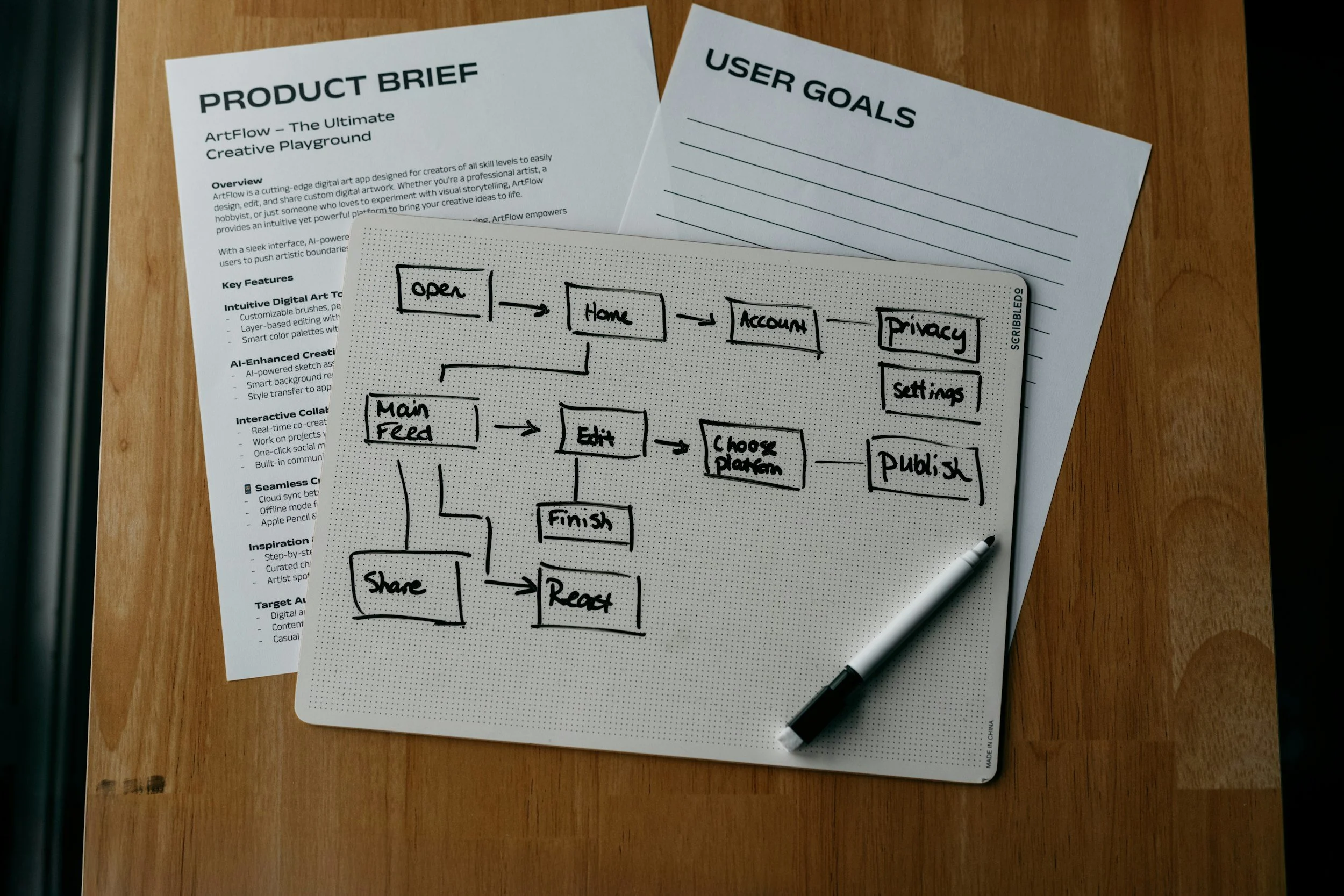
Every business process exists to deliver value.
If it doesn’t:
Reduce friction
Increase certainty
Shorten cycle time
Improve quality
Lower cost
Reduce risk
… then it’s noise.
Before writing a line of code, the most valuable time invested in any transformation project is still:
Change analysis.
Not platform selection.
Not integration planning.
Not UI design.
Change analysis.
Why This Matters More in the AI Era
In the early 2000s, software was expensive.
Coding was slower.
Projects had natural friction.
Now?
We can build almost anything.
Which means the constraint is no longer technology.
The constraint is clarity.
AI amplifies whatever system it touches.
If the underlying workflow is:
Redundant
Politically distorted
Over-controlled
Poorly defined
Built around legacy assumptions
AI will optimise the wrong thing faster.
We’re finding that foundational strategic toolkits — the kind that force you to map value, analyse waste, identify friction, and quantify the delta — are more relevant now than they were 20 years ago.
Not less.
It’s Time for AI to Earn Its Keep
AI is not a strategy.
It’s a multiplier.
If you haven’t defined:
What value is being delivered
Where waste is occurring
What the measurable delta looks like
What ‘better’ means in numbers
Then you’re automating activity.
Not delivering ROI.
In every serious transformation initiative we’ve worked on recently, the breakthrough moment didn’t come from the model or the tool.
It came from sitting with stakeholders and asking:
What value is actually being created here?
What step exists purely because “that’s how we’ve always done it”?
What would this look like if we started from zero?
Where does rework hide?
What is the cost of delay?
What is the cost of confusion?
Only after that conversation does code become powerful.
The Hidden Cost of Skipping Change Analysis
When organisations skip structured change analysis, three things happen:
They digitise legacy inefficiencies.
They add layers rather than removing them.
They struggle to prove ROI.
And without provable ROI, transformation initiatives lose political capital.
Which is why we’re seeing a renewed interest in disciplined implementation frameworks.
Not because they’re fashionable.
Because they work.
The Strategic Toolbox Still Wins
The foundational strategic disciplines still matter:
Mapping value streams
Conducting change impact analysis
Identifying friction and failure points
Quantifying baseline performance
Designing future-state systems intentionally
AI doesn’t replace these tools.
It increases the return on using them properly.
The more powerful the technology becomes, the more important structured thinking becomes.
From Plan to Proof
At Arrow, we’re seeing this pattern repeatedly:
The organisations that win in the AI era aren’t the ones adopting tools fastest.
They’re the ones who:
Define value clearly.
Analyse change before coding.
Remove waste deliberately.
Implement technology against measurable KPIs.
Track the delta.
AI earns its keep when it reduces:
Time
Cost
Errors
Friction
Emissions
Headcount pressure
If it can’t demonstrate a measurable shift, it’s a feature — not a transformation.
A Final Thought
The Helix framework is 25 years old.
AI in the workplace is less than five.
Yet the discipline required to redesign a Value Add Delivery System hasn’t changed.
If anything, it’s more valuable than ever.
The tools evolve.
The fundamentals endure.
And in a world racing to build the next shiny thing, the competitive advantage belongs to those who pause just long enough to ask:
“Where is the real value, and how do we redesign the system before we automate it?”
Written by Jeff Anderson, Founder of Arrow Strategic Communications.
Jeff leads strategy, software delivery, and workflow transformation initiatives across Australia.
