
What Showing Up to Pick Up Rubbish Actually Teaches You About Making Things Better
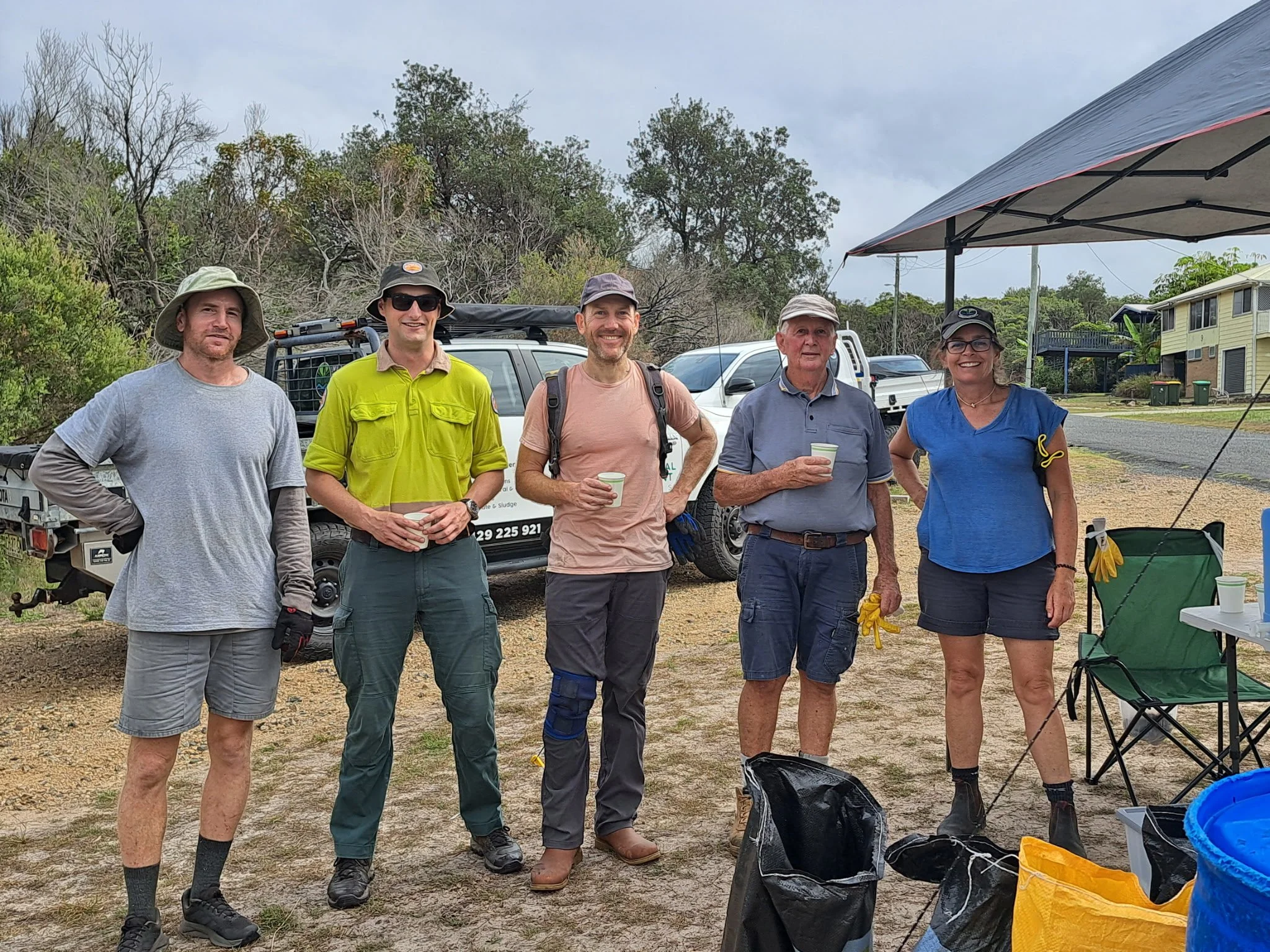
Clean Up Australia Day in Port Stephens
Happy Clean Up Australia Day.
Today, many Australians stepped outside in their local area and contributed more than nothing to the health of our country. We were lucky enough to be with them.
Arrow is based in Newcastle, NSW. We spend a lot of time around Newcastle, Lake Macquarie, and the Port Stephens region. This morning, we were at Fishermans Bay, just south of Nelson Bay, walking along the foreshore as part of Clean Up Australia Day 2026.
This article isn’t about showing off. It’s not political. It’s not about making anyone feel bad.
It’s about something simple: what starts to happen when you decide to contribute more than nothing.
What ‘More Than Nothing’ Means
For a long time, we let days like this pass us by. We were busy. The problems felt global and overwhelming. We weren’t quite sure where we fit in.
The Pacific Garbage Patch covers millions of square kilometres. What’s picking up a few bits of rubbish at Fishermans Bay going to achieve?
That scale mismatch can stop you before you start.
Over the last couple of years, we stopped debating it and started contributing more than nothing.
What we’ve learned is that ‘more than nothing’ looks different for everyone. Different resources. Different skills. Different mobility. Different time availability.
For some, it’s one morning a year.
For others, it’s a few hours every couple of months.
For some businesses, it’s financial support for native replanting.
For others, it’s lending people, vehicles, tools, or coordination skills.
It doesn’t have to be massive. And that shift — from zero to something — is where things begin to multiply.
Better Together: The Social Fabric
This morning, we were matched with local residents from the Anna Bay area, along with representatives of:
People we likely would not have met otherwise.
There were planners.
There were storytellers.
There were people who knew every track and access point.
There were people who could identify native plants.
There were folks able to access the steep areas with hard-to-reach rubbish.
There were people manning the gazebo, providing bags, pouring water and keeping others hydrated.
Everyone had something to contribute.
That’s the social fabric.
When you move from ‘nothing’ to ‘more than nothing’, you don’t just improve a patch of land. You connect with people, and you start to care more about that location long-term as well. Next time you see those people, they’re not strangers anymore. They’re part of your community.
The Difference Between Random Effort and Coordinated Impact
One of the most interesting things we’ve learned is this:
It’s not just about picking up rubbish. There’s a structure behind it.
Instead of isolated efforts in isolated spots, there are coordinated priorities in specific places. National Parks, local Indigenous representatives, native plant nurseries, councils, businesses, and community groups are working on plans they’ve collaborated on.
We heard about the businesses contributing their expertise or funds for replanting initiatives. We heard about long-term weed management programs. We saw the results of years of coordinated work.
From the headland at the south end of One Mile Beach — once thick with lantana and bitou — you can now see one of the best views along the Tomaree Coastal Walk. Native vegetation is recovering along much of this 27km stretch.
That didn’t happen because of one day.
It happened because people did more than nothing, repeatedly, within a coordinated framework.
Without coordination, you get activity.
With coordination, you get outcomes.
Fishermans Bay
Fishermans Bay was surprisingly clean. Pleasantly so.
Walking along, enjoying the view, we found a bottle here, a lid there, a piece of rope, some styrofoam. Not much.
Locals told us they’ve been at it for years. A bit each week. Without that consistency, it would be out of control.
And then, suddenly, the bags were heavy. Full to overflowing. Just a few hundred metres of coastline on an already well-maintained stretch.
That’s when it hits you.
Even in the good areas, there’s still a lot of work to do. And many hands make light work.
The Questions We All Ask
Back when we did nothing, we used to ask:
Is this even worth it?
Shouldn’t systemic problems be solved at scale?
Should it be about donating money instead?
Shouldn’t businesses focus more on commercial outcomes for the area instead?
Aren’t we just busy people trying to fit in one more thing, rather than doing it properly?
They’re fair questions.
But here’s what we’ve learned.
It doesn’t matter if your ‘more than nothing’ isn’t massive. It just needs to be connected.
Do it once.
Do it once a year.
Do it every couple of months.
Contribute some money if you can.
Just don’t go it alone.
Without context, there’s every chance you’ll do the wrong thing in the right place, or the right thing in the wrong place. Coordinated action multiplies outcomes.
We’re better together. Stronger. More connected. Maybe even more Australian.
Community, Landscape, and Perspective
We met people today who’ve lived around Port Stephens for decades, and people who moved to the area only recently.
An old-timer showed us a cheeky little swimming hole we had no idea existed.
You think you know your region well, and then you realise there’s so much more to learn.
Getting out into the landscape with others is good for your physical health. It’s good for your mental health. It’s good for your sense of belonging. It feels good to be part of something constructive.
That’s what happens when you choose to do more than nothing.
You Don’t Have to Be an Activist
You don’t need to be a greenie.
You don’t need to have a political bone in your body.
You don’t need to be loud, outspoken, or even particularly sociable.
You just need to show up.
You don’t even have to be particularly fit.
‘More than nothing’ is great. It’s accessible to everyone.
Clean Up Australia Day in Newcastle and Port Stephens
Newcastle, Lake Macquarie, and Port Stephens are special places to us. They’re where we swim, where we walk, where our kids play, and where we clear our heads between meetings and projects.
As a business operating in this region, it feels right to contribute — even in small ways — to the landscape that supports our lives and our work.
It’s not about positioning. It’s about participation. And participation changes how you feel about where you live.
A Simple Invitation
If you’ve ever wondered whether it’s worth it, consider this your nudge.
Start with once.
Start with more than nothing.
You might be surprised how quickly:
You feel more connected.
You meet people you wouldn’t otherwise know.
You see impact where you didn’t expect it.
Your heart sings a little bit.
Happy Clean Up Australia Day, Newcastle and Port Stephens.
