
The Newcastle Innovation Update: February 2026
Newcastle is building things that work.
This isn't about announcements or aspirations. It's about programmes delivering measurable results, businesses hitting commercial milestones, and infrastructure taking shape across the Hunter region. From coastal management decisions with real price tags attached, to wearable health technology reducing falls amongst our ageing population, to export-grade manufacturing capability competing globally—the region is experiencing substantive progress worth documenting.
Arrow operates as part of Newcastle's innovation fabric. We're embedded in this ecosystem, working alongside organisations converting intention into operational reality. This update captures what we're noticing, admiring, and celebrating across the Hunter right now. The focus remains on tangible outcomes: technologies deployed, ventures scaling, projects completed, results measured.
Coastal Management That Doesn't Hide the Trade-Offs
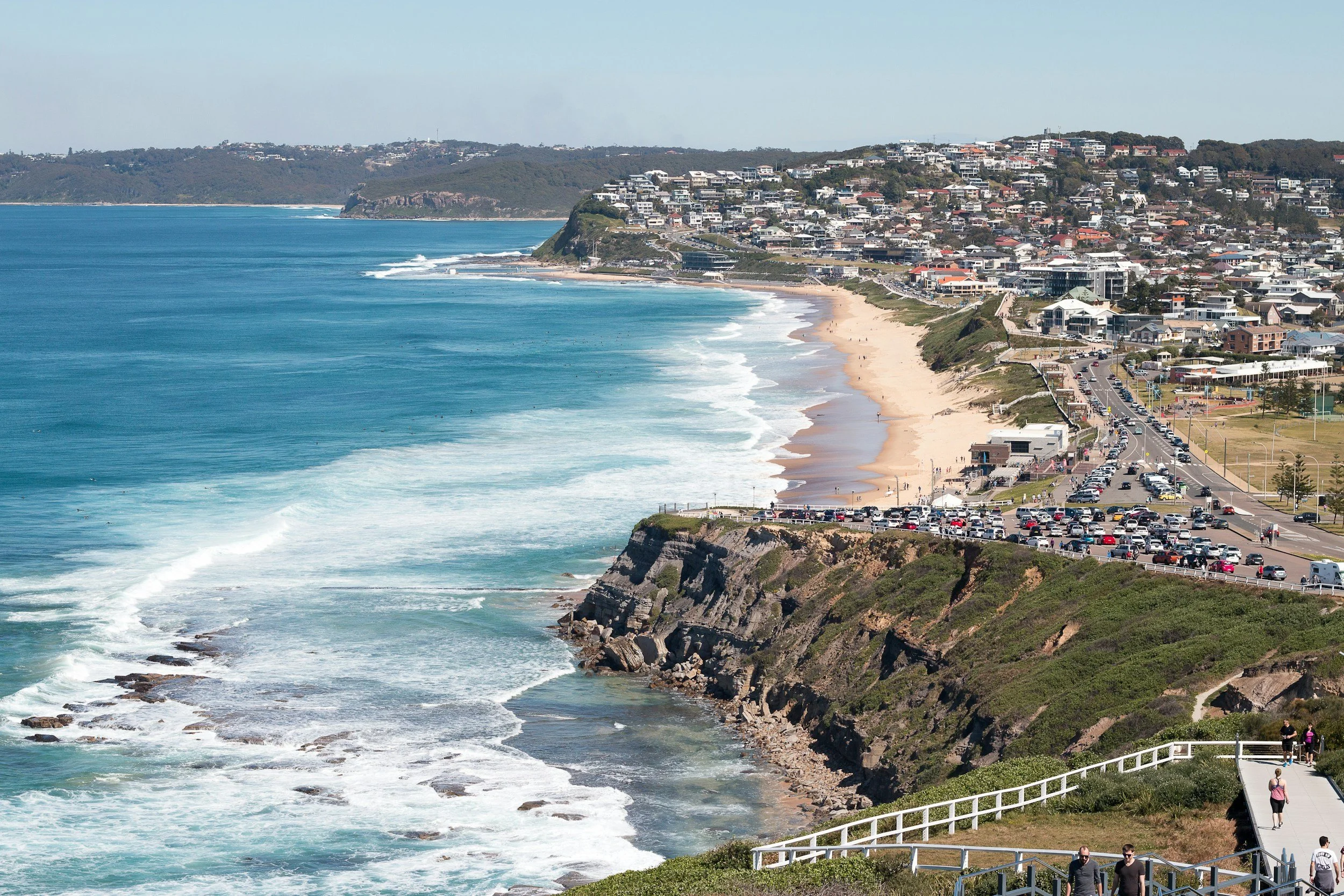
The City of Newcastle's Southern Beaches Coastal Management Program represents commercially honest decision-making at regional scale. This isn't beautification theatre. It's about storm damage repair, sea level rise adaptation, and difficult choices about what gets protected and what doesn't.
The programme addresses immediate questions Newcastle residents can see with their own eyes. Beach erosion is visible. The technical modelling explaining why it's happening is publicly available. The cost-benefit analysis doesn't pretend perfect solutions exist.
Council has laid out scenarios with actual price tags, timeframes, and consequences. Do you spend $50 million on seawalls? Do you invest in sand nourishment to maintain beaches and surf breaks? Do you accept that some infrastructure will need to relocate? The community participates in deciding what gets protected and what doesn't, carrying accountability for the outcome alongside local government.
The operational mechanism creating genuine collaboration is straightforward. Council uses signage in affected areas, email campaigns, and social channels to inform and invite participation. Newcastle's proactive community means information finds you through conversations, work networks, and mates sending messages asking if you've heard about it yet.
People can see erosion at their local beach, access technical reports explaining the causes, then participate in protection decisions. That's not performative consultation. It's evidence-based planning where visible reality connects to transparent analysis, producing commercially grounded choices.
That's very Newcastle.
Health Technology Moving From Prototype to Impact
The Movement Belt demonstrates how regional innovation infrastructure converts good ideas into operational capability. Envisioned by a local physiotherapy leader working with aged care and NDIS populations, The Movement Belt is wearable technology supporting people in maintaining, recovering, relearning, and improving walking ability.
The product brings together healthcare insights, smart technology, product development specialisation, and targeted process advisory services from the University of Newcastle's I2N accelerator. That integration of clinical knowledge, technical capability, and commercialisation support reflects the region's capacity to enable health innovation beyond research papers.
Founder Johnty Durrheim recently secured a commercialisation grant from Dantia. The funding enables further prototype development for devices already helping the ageing population experience fewer falls and enjoy Newcastle's lakes and beaches where degrading mobility previously held them back.
This isn't speculation about future potential. It's measurable progress: grant secured, prototypes deployed, falls reduced, mobility improved. The Movement Belt is scaling to help Lake Macquarie and Newcastle residents maintain independence and quality of life. That's innovation delivering tangible outcomes for the community.
Export-Grade Manufacturing Capability at Scale
Banlaw received the HunterNet Excellence in Global Export Award for 2025, recognising sustained international growth in advanced manufacturing exports. The Newcastle-based engineering manufacturer designs and produces fuel management, hydrocarbon transfer, and emissions-control systems for heavy industry, defence, mining, marine, and transport sectors globally.
The award signals strong global demand for Hunter-designed industrial technology, scalable production capability, and high-value engineering IP developed and commercialised locally. This isn't startup headlines. It's export-grade industrial capability operating at commercial scale.
Banlaw deploys intelligent fuel nozzles and coupling systems preventing misfuelling and hydrocarbon spillage, integrated fuel management systems tracking usage and optimising fleet operations, and data-enabled monitoring platforms linking physical infrastructure with operational analytics. The systems reduce fuel wastage, environmental contamination risk, operational downtime, and compliance exposure.
Physical product plus embedded data plus systems integration. That's Industry 4.0 maturity in practice.
The technology directly contributes to reduced hydrocarbon leakage, lower fuel consumption through optimisation, and improved fleet transition planning toward electrification and lower-emission alternatives. In heavy industry, incremental efficiency gains at scale translate to material carbon and cost savings. That's measurable sustainability grounded in operational improvement.
To win international contracts in regulated sectors, Banlaw demonstrates engineering certification, precision manufacturing standards, quality assurance systems, and reliable global logistics and support. That operational maturity reflects a Hunter manufacturing ecosystem capable of competing globally.
Banlaw's success is owned by them and well earned. It's also symptomatic of Newcastle's collaborative business ecosystem. They've been an Arrow client for a decade, so we're biased and proud of their progress. The company demonstrates advanced mechanical and digital system integration, export competitiveness from a regional base, measurable environmental and operational impact, and ongoing product innovation rather than static legacy manufacturing.
This is innovation that ships—engineered locally, deployed globally, proven commercially.
Infrastructure Planning for Electrified Logistics
The Hunter is actively scoping heavy vehicle EV charging infrastructure across regional freight corridors. This development aligns with Newcastle's broader electrification goals and state-level freight decarbonisation strategies.
This isn't just more EV chargers. It's early-stage infrastructure planning specifically for electric buses, heavy rigid trucks, last-mile freight vehicles, and fleet electrification at depots and industrial estates.
Heavy vehicles account for disproportionate transport emissions. Unlike passenger EVs, they require high-capacity grid connections, megawatt-scale charging capability, industrial land access, and integrated depot-based energy management.
The region is mapping strategic freight corridors, depot electrification opportunities, grid capacity upgrades, and integration with renewable energy and battery storage. That forward planning signals the Hunter is preparing for electrified logistics at scale rather than waiting for it to happen.
The work connects to broader regional infrastructure momentum: Summerhill Waste Management Centre solar and energy initiatives, Newcastle Climate Action Plan 2026-2030 electrification goals, Newcastle Airport expansion with freight capacity implications, and Hydrogen Hub development providing parallel green fuels for heavy transport decarbonisation.
The important development this month isn't ribbon-cutting. It's serious systems planning for freight electrification requiring engineering design, energy modelling, cross-agency coordination, commercial viability analysis, and private fleet buy-in. The planning remains inclusive with industry because we don't know with certainty which charging, hydrogen, or battery-swap methodologies will dominate the next decade.
The Hunter is preparing its logistics backbone for a lower-emissions economy through integrated infrastructure planning.
What This Momentum Reveals
The collective pattern across these examples reveals a region building systematic innovation capacity through execution rather than isolated breakthrough moments.
Coastal management demonstrates evidence-based planning with community accountability. Health technology shows clinical innovation converting to commercial outcomes through regional support infrastructure. Manufacturing capability operates at export scale with measurable environmental impact. Infrastructure planning prepares freight logistics for electrification transition.
These aren't disconnected projects. They're symptoms of regional capability maturation across sectors—government decision-making that doesn't hide trade-offs, commercialisation pathways that connect research to deployment, industrial competitiveness proven through global contracts, and forward planning for systematic infrastructure transformation.
Newcastle is experiencing substantive progress worthy of documentation and regional pride. The innovation happening here is grounded in operational reality, measured through tangible outcomes, and building toward sustained competitive advantage.
Arrow is proud to operate as part of this ecosystem—documenting the progress, celebrating the achievements, and sometimes participating in the work that converts regional ambition into measurable capability.
This is what innovation looks like when it ships.
The Newcastle Innovation Update
Observed and documented by Jeff Anderson, Arrow Strategic Communications
